
Most SaaS companies build their early pipeline on paid ads and outbound, both of which get more expensive as the market matures. Organic search is the channel that gets cheaper over time instead of more expensive: every ranking blog post, comparison page, and feature page keeps generating demo requests long after it’s published. That’s the case for SaaS SEO, and it’s why more B2B software companies are treating it as a core growth channel rather than an afterthought.
This guide covers what makes SaaS SEO different from other B2B industries, the core pillars a strong program needs, common mistakes that quietly cap pipeline growth, and how to measure whether it’s actually working.
Why SaaS SEO Is Different
SaaS SEO isn’t about ranking for one or two head terms, it’s about capturing demand across an entire buying committee and a long sales cycle.
- Multiple buyer personas search differently. A HR and People Ops platform might be evaluated by an HR director, a finance stakeholder, and IT, all searching different terms at different stages.
- Bottom-of-funnel keywords are highly competitive. Comparison and alternative searches (“X vs Y”, “best X software”) convert extremely well but are fought over hard by every competitor in the category.
- Trial and demo intent needs its own strategy. Content built to inform is different from content built to convert, and most SaaS sites need both working together.
The SEO Pillars Every SaaS Company Needs
1. Bottom-of-Funnel Comparison and Alternative Pages
“[Category] software,” “[Competitor] alternatives,” and “[Competitor] vs [Competitor]” searches convert at a much higher rate than top-of-funnel content because the searcher is actively evaluating tools. These pages need honest, detailed comparisons, not just marketing copy, to earn trust and rank against competitors doing the same thing.
2. Feature and Use-Case Pages Built for Each Buyer
Different segments need different proof points. A B2B SaaS platform selling into multiple industries or company sizes benefits from dedicated pages for each meaningful use case, rather than one generic features page trying to speak to everyone at once.
3. Content That Builds Trust in Regulated or Sensitive Categories
Categories like fintech and financial SaaS need to build extra credibility since buyers are evaluating security, compliance, and data handling alongside the product itself. Security certifications, compliance documentation, and transparent data practices all belong in the content strategy, not just the fine print.
Common SEO Mistakes in SaaS
| Mistake | Why It Hurts |
|---|---|
| Only targeting top-of-funnel, informational keywords | Misses the high-converting comparison and alternative searches |
| One generic features page for every buyer persona | Fails to speak to the specific concerns of each stakeholder |
| No content addressing security, compliance, or data handling | Loses trust with cautious buyers in regulated categories |
| Weak internal linking between blog content and product pages | Fails to convert informational traffic into trial or demo requests |
| Treating SEO and product marketing as separate functions | Produces content that ranks but doesn’t reflect how the product is actually positioned |
Pricing and packaging pages deserve the same SEO attention as blog content. Buyers researching “[category] pricing” or “[category] cost” are close to a purchase decision, and a clear, well-optimized pricing page can capture demand that would otherwise go to a competitor’s comparison page. Many SaaS teams treat pricing pages as pure UX, but they’re also some of the highest-intent organic entry points on the site.
How to Measure ROI on SaaS SEO
Traffic and rankings are early indicators, but pipeline is what matters. The numbers worth tracking are:
- Demo or trial requests generated from organic search, tracked by content type
- Organic-sourced pipeline value, not just lead volume
- Cost per acquired customer compared to paid channels
- Rankings for bottom-of-funnel comparison and alternative terms, since these convert at the highest rate
SaaS SEO typically takes 4 to 9 months to build meaningful pipeline contribution, longer than e-commerce or local businesses because of longer sales cycles and more competitive keywords. But once comparison and feature pages start ranking, they tend to keep generating demo requests at a fraction of the cost of paid acquisition.
Content velocity matters more in SaaS than in most industries because competitors are shipping comparison pages and feature updates constantly. A program that publishes consistently, backed by keyword research tied to actual product roadmap and positioning changes, will outpace one that treats SEO as a quarterly project.
What a Strong SaaS SEO Program Looks Like
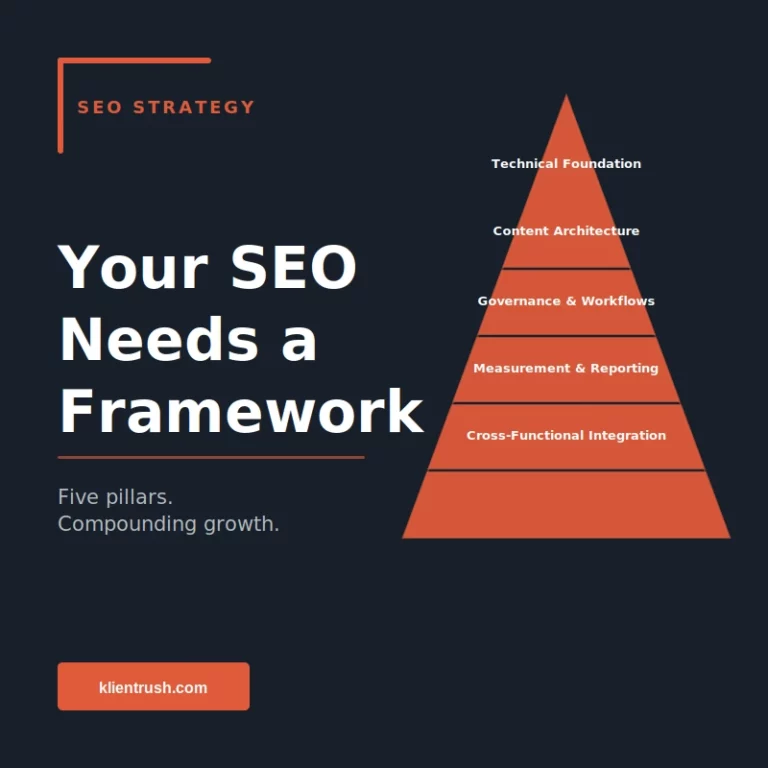
An effective program combines technical SEO for fast-shipping product teams, a content strategy spanning top-of-funnel education through bottom-of-funnel comparison content, and close alignment with product marketing so SEO content reflects real positioning. Companies serving vertical or niche markets benefit especially from this alignment, since generic SaaS content rarely speaks convincingly to a specialized buyer.
Frequently Asked Questions
How long does SaaS SEO take to show results?
Most companies see measurable pipeline contribution within 4 to 6 months, with highly competitive categories taking 9 to 12 months for strong comparison-page rankings.
Should SaaS companies build comparison pages against competitors?
Yes, this is often one of the highest-converting content types available. Honest, detailed comparisons build trust and capture buyers who are actively evaluating alternatives, which is exactly the intent SEO should be targeting.
Does technical SEO matter for SaaS sites built on modern JS frameworks?
Yes, significantly. Many SaaS marketing sites are built on React, Vue, or similar frameworks that can create rendering and crawlability issues if not configured correctly. Server-side rendering or static generation for marketing pages, clean URL structures, and fast load times all directly affect how well content ranks, regardless of how strong the writing is.
How does SaaS SEO differ across company sizes?
Early-stage SaaS companies typically win by targeting specific, lower-competition use cases and niches before competing for broad category terms. Enterprise-focused SaaS needs content that speaks to procurement, security, and integration concerns alongside the core product benefits, since enterprise buying committees research far more thoroughly before a demo request.
KlientRush builds SEO programs for SaaS companies around bottom-of-funnel content, persona-specific pages, and the trust signals that turn organic traffic into pipeline. Get in touch to see where your SEO stands today.